
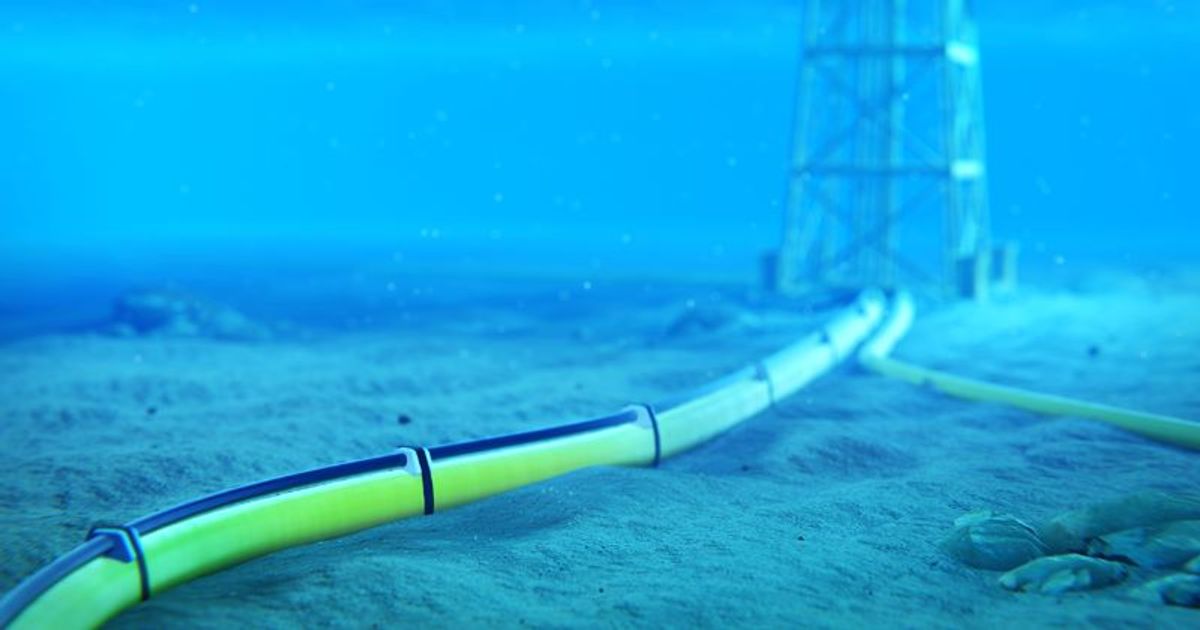
An underwater cable and a sealed instrument housing may each look suitable for the application. Connecting them introduces another engineering question: how will the cable pass into the housing while preserving the required protection?
That entry point deserves its own review.
The cable jacket, entry hardware, enclosure wall, and internal routing meet in a relatively small space. Each contributes to the finished interface. Selecting them separately and checking the fit at the end can leave important questions unresolved.
For an underwater instrument, camera, or ROV system, planning the cable entry early helps the mechanical and cable teams work toward the same arrangement.
Draw the boundary the cable must cross
Begin by identifying the interface.
Does the cable enter a dry enclosure? Does it connect to a detachable external component? Will the connection be assembled in a workshop or disconnected during operation?
A permanently installed cable entry and a detachable underwater connector serve different purposes. Their selection should follow the equipment’s operating and maintenance requirements.
Show the interface in the system drawing, including the inside and outside conditions. That makes it easier to discuss which components must provide sealing, mechanical support, and connection functions.
Without this boundary definition, different suppliers may make different assumptions about what their part is expected to do.
Match entry hardware to the actual cable
A sealing arrangement needs more information than the description “underwater cable.”
The cable’s outside dimensions, jacket material, construction, and permitted handling all matter when reviewing compatibility with the entry hardware.
A nominal diameter alone may not establish that a particular seal is suitable. The hardware manufacturer’s compatibility requirements and approved installation method need to be checked.
For example, Blue Robotics publishes penetrator selection guidance using cable measurements and compatibility information. That illustrates the need to evaluate a specific cable and entry arrangement rather than assume that anything fitting through the opening will seal correctly.
This does not establish compatibility with a Linden cable; the proposed combination still requires its own review.
Keep housing attachment and cable sealing separate
The entry hardware must interface with both the cable and the enclosure.
A suitable cable seal does not resolve every question about the enclosure connection. The mounting arrangement, available wall geometry, access for assembly, and manufacturer-specified sealing surfaces also need attention.
Consider whether the hardware can be installed and inspected once the surrounding equipment is in place.
A fitting that is easy to tighten on an empty housing may be inaccessible after electronics, brackets, or neighboring penetrators are installed.
Include the assembly sequence in the design review. It is easier to change spacing before the enclosure is manufactured than after the complete instrument has been built.
Define how mechanical loads are handled
The cable entry may experience forces from outside the housing.
For an ROV tether, movement and deployment can affect the connection. For a fixed instrument, handling during installation or recovery may still introduce load.
Identify how the intended arrangement supports the cable and transfers mechanical forces. Do not assume that an electrical or optical termination is also a suitable structural attachment.
The cable designer and enclosure designer should agree on the required load path and support arrangement.
This remains relevant when using a buoyant cable. Buoyancy describes behavior in water; it does not remove the need to assess loads at the connection during handling and operation.
Leave room for the cable inside
The external entry can be well positioned while the internal route remains awkward.
Once inside, fibers and conductors need space to reach their destinations without being forced into unsuitable bends or trapped by nearby components.
Review the transition from the entry hardware to the internal connections. Include any breakout, support, and service allowance.
A singlemode fiber optic connection may need a different internal route from electrical conductors in the same assembly. The enclosure layout should accommodate both deliberately.
Use the selected cable and termination requirements to establish the space needed. Do not rely only on the size of the opening in the enclosure wall.
Avoid assuming that potting solves every interface
Potting can form part of an engineered cable entry, but its suitability depends on the materials and process.
The cable jacket, potting material, housing interface, surface preparation, and curing requirements all need consideration.
Blue Robotics’ documentation for its general-purpose potted penetrator explains that bond strength depends on several material and processing factors, and that an unrestricted depth rating cannot simply be assigned to a user-sealed assembly.
That is a useful reminder to qualify the finished arrangement.
A visually tidy seal is not, by itself, evidence that the complete interface meets the intended operating conditions.
Agree on verification responsibilities
Several suppliers may contribute to the assembly: the cable manufacturer, entry-hardware supplier, enclosure manufacturer, and system integrator.
Establish who will verify the completed interface and what configuration will be tested.
The agreed plan should reflect the actual application, including relevant environmental and functional requirements. Record which cable, hardware, materials, and assembly process were used.
If any of those change, review whether the earlier results remain applicable.
This avoids treating evidence for an individual component as automatic approval of every assembly containing it.
Plan what happens during service
Ask whether the cable can be removed without damaging the entry arrangement, what parts need replacement, and whether reassembly requires a specific procedure.
A removable fitting is not necessarily intended for repeated reuse without replacing seals or other components. Follow the selected manufacturer’s instructions.
Also consider whether technicians can access the internal connections without disturbing unrelated equipment.
A clear service approach helps determine whether the instrument should use a permanent entry, detachable assembly, or another engineered arrangement.
Bring the interface into the cable discussion
Linden Photonics’ underwater cable solutions provide a starting point for discussing cable construction. Its ROV cable page covers tether configurations.
When requesting a quote, share the intended housing interface as well as the cable requirements.
A cable entry works best when the cable, hardware, enclosure, and verification plan are developed as one coordinated interface.