
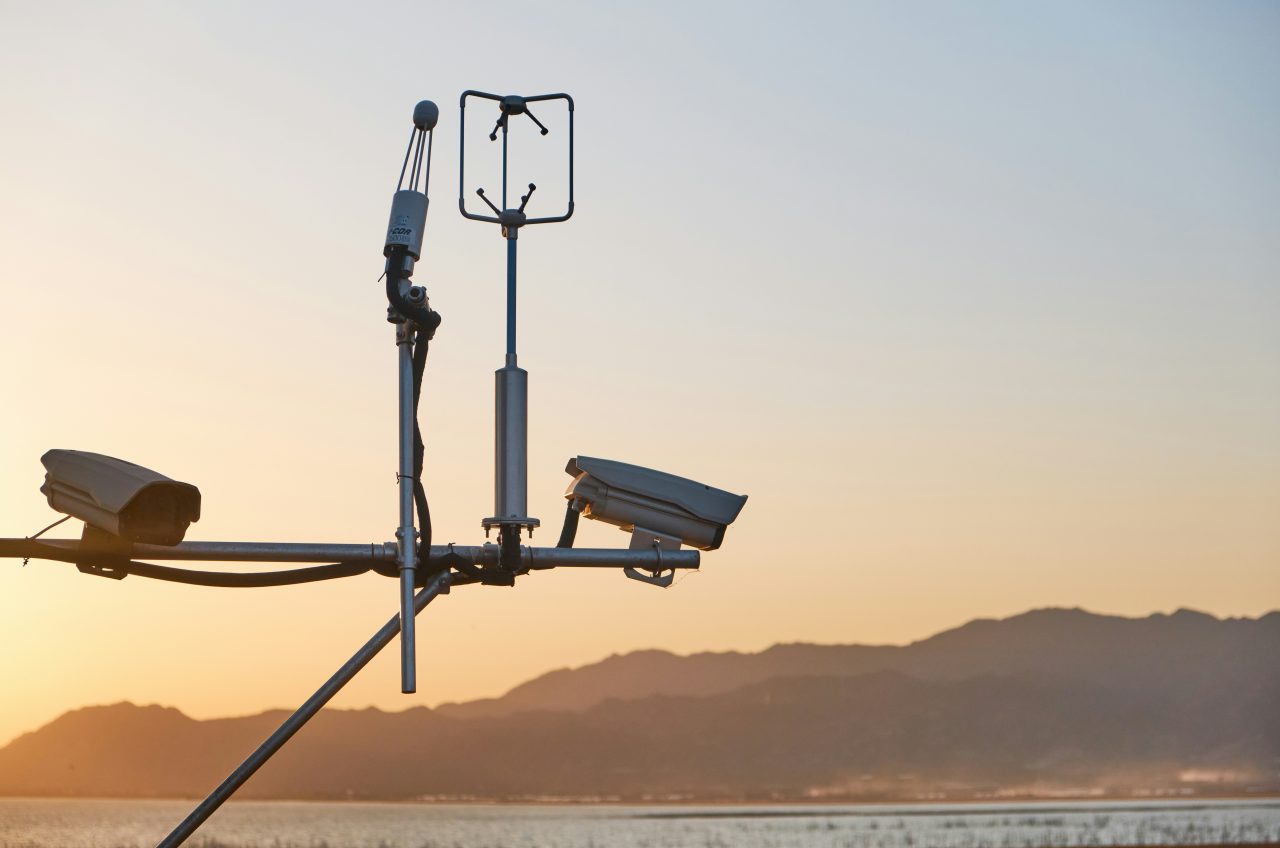
A remote sensor sounds simple until you start working out everything it needs.
There is the sensor itself.
Then there is communication.
There may be a camera, controller, light source or other electronics.
Some equipment needs continuous power. Other systems need several data channels.
Before long, what started as one remote instrument can require several different connections.
One option is to run them separately.
Another is to integrate multiple functions into a single cable.
This is where hybrid cable design can become interesting.
What Is a Hybrid Cable in This Context?
In simple terms, a hybrid cable combines more than one type of functional element within a single overall cable construction.
For a remotely deployed instrument, that could mean optical fiber for data together with electrical conductors for power.
Linden Photonics develops hybrid cable solutions and its ROV range includes both fiber-only and hybrid tether configurations.
The attraction is easy to understand.
Instead of managing one communication cable and another power lead, the platform may be connected through one engineered assembly.
But that does not mean hybrid is automatically the right choice for every sensor system.
Start by Looking at the Complete Platform
The first question should not be, “Can we make this a hybrid cable?”
It should be:
“What does this equipment actually need?”
Suppose an offshore monitoring platform contains cameras, environmental sensors and communications equipment.
A second system might be a compact industrial inspection unit.
A third could be an underwater instrument that is deployed for several hours and then recovered.
All three may require power and data, but their cable priorities could be completely different.
The offshore platform may prioritize long-term environmental durability.
The inspection unit may have severe diameter restrictions.
The underwater system may be more concerned with buoyancy and deployment loads.
A good cable specification begins with these application details.
Fewer Separate Cables Can Simplify Routing
One obvious advantage of integration is routing.
If three separate cables all have to follow the same path, they need space and some method of managing them together.
They can move independently.
They may also require separate strain relief and separate handling during installation.
A combined cable can simplify the physical arrangement.
This is especially useful in applications where space is limited or where the cable has to pass through a narrow mechanical route.
However, combining everything also means the complete cable has to meet all requirements at the same time.
That makes engineering more important, not less.
Remote Equipment Makes Reliability Important
Replacing a cable in an office is inconvenient.
Replacing one on remote equipment can be much more difficult.
The instrument may be underwater, at height, offshore or located somewhere that requires specialist access.
In those applications, the cost of a cable problem is not limited to the price of the cable.
There may be downtime, recovery operations and lost data.
This is why rugged construction becomes important for remote sensor platforms.
Linden’s custom fiber optic cables are designed for environments where standard commercial cables may not provide the required mechanical or environmental performance.
Underwater Sensors Introduce Additional Questions
Place the sensor underwater and the cable has another job.
It becomes part of the deployed mechanical system.
Water exposure is an obvious consideration, but it is not the only one.
Cable weight and buoyancy can affect how the line sits in the water.
Tensile loads can appear during deployment and recovery.
Currents can move the cable.
The route may bring it into contact with structures or seabed features.
Linden’s fiber optic range identifies subsea sensors, oceanographic equipment and underwater monitoring among the applications for rugged underwater fiber optic cable.
The company also has dedicated experience in Marine Research applications where robust data links are required in demanding ocean environments.
Buoyancy Should Match the Deployment
A hybrid underwater cable may contain more components than a fiber-only cable, which makes its overall mechanical behavior particularly important.
Does the cable need to float?
Should it remain close to neutral in the water?
Would negative buoyancy be more appropriate?
There is no universal answer.
The correct choice depends on the platform and mission.
For example, a tethered vehicle may benefit from a different cable behavior than a stationary sensor placed on the seabed.
This is one reason Linden offers buoyancy choices within its ROV tether cable range.
Power Requirements Need to Be Defined Properly
A request for a “fiber and power cable” is only a starting point.
The electrical side of the design needs real specifications.
What voltage will the system use?
How much current is required?
How long is the cable?
How much voltage drop can the equipment tolerate?
Will the load be continuous?
Does the platform have high startup demand?
These questions affect conductor selection.
At the same time, conductor size influences the overall cable.
Larger electrical elements can increase diameter and weight, which may then affect flexibility and deployment.
This demonstrates the central challenge of hybrid cable design: the optical, electrical and mechanical requirements are connected.
The Optical Side Needs Equal Attention
It is equally important not to treat the fiber as a generic addition.
Engineers still need to determine whether the system requires single-mode or multimode fiber, how many fibers are needed and what connectors or interfaces will be used.
Transmission distance is important.
So is future expansion.
A remote platform may initially carry one data stream and later add another sensor.
That does not necessarily mean every cable should be oversized for hypothetical future requirements, but expected system development should be discussed during specification.
Linden supports both single-mode and multimode configurations within its fiber optic cable manufacturing capabilities.
Think About Handling Before Finalizing the Cable
Engineers naturally focus on operation.
The cable also has a life before and after operation.
Will it be stored on a reel?
How often will it be deployed?
Will technicians handle it wearing gloves?
Does it need to fit into a transport case?
Will connectors be attached and removed regularly?
Could the line be pulled across a deck or factory floor?
These practical questions can influence jacket selection, strength requirements, diameter and termination.
A design that looks perfect in a system diagram can be frustrating in the field if nobody considered how technicians would actually use it.
When Separate Cables May Still Be Better
Hybrid construction has real advantages, but separate cables are not automatically inferior.
If the power and data routes are different, combining them may offer little benefit.
If one cable needs frequent replacement while the other remains permanent, separating the functions might make maintenance easier.
A system with unusual electrical requirements may also make separate cable assemblies more practical.
The right decision should be based on system design rather than assuming that integration is always more advanced.
Information to Gather Before Requesting a Hybrid Cable
Before discussing a custom hybrid design, it helps to prepare the key requirements.
These may include:
- fiber type and fiber count;
- transmission distance;
- electrical voltage and current;
- cable length;
- desired outer diameter;
- connector requirements;
- tensile loads;
- bend requirements;
- operating temperature;
- water or chemical exposure;
- buoyancy requirements;
- deployment method;
- and expected quantity.
Linden’s custom cable process asks for many of these same application and environmental details when evaluating a new cable requirement.
Design Around the Mission, Not the Cable Category
Ultimately, the choice between separate cables and a hybrid cable comes back to the equipment.
If one compact assembly makes deployment easier, reduces routing complexity and fits the mechanical requirements, hybrid construction may be a strong solution.
If combining the functions adds unnecessary size or complicates maintenance, separate assemblies may be more sensible.
There is no benefit in choosing a sophisticated cable design simply because it sounds more advanced.
For remote sensing, marine equipment, robotic systems and other demanding platforms, Linden Photonics can develop custom hybrid and fiber optic cable solutions around the actual optical, electrical and mechanical requirements.
The best design is the one that makes the complete system simpler and more reliable—not merely the cable itself.