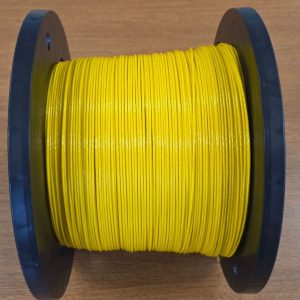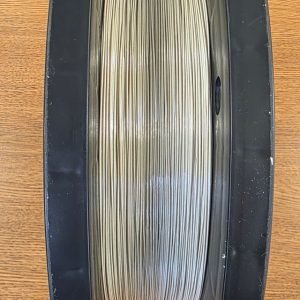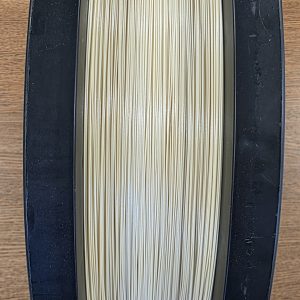
LINDEN-SPE-7107-19 Hybrid (-049) Buoyant Hybrid Cable
The LINDEN-SPE-7107-19 Hybrid (-049) Buoyant Hybrid Cable is a rugged marine-grade hybrid cable designed for underwater and offshore applications requiring both fiber optic communication and electrical power or signal transmission. Its buoyant design improves handling in water while supporting reliable performance in demanding environments.
Description
The LINDEN-SPE-7107-19 Hybrid (-049) Buoyant Hybrid Cable is a rugged floating hybrid cable designed for demanding marine, subsea, offshore, and tactical field applications where both fiber optic communication and electrical power or signal transmission are required in a single cable structure. Built with buoyant materials and a hybrid internal construction, this cable is suitable for environments where lightweight handling, water resistance, flexibility, and dependable performance are essential.
This cable is commonly used with ROVs, underwater sensor systems, floating communication links, offshore monitoring equipment, marine research systems, and temporary deployable underwater networks. Its buoyant design helps reduce drag and cable strain in water, making it easier to manage during deployment and recovery.
Key Features
- Hybrid cable design combining fiber optic and electrical elements
- Buoyant construction for floating or near-surface marine use
- Rugged outer jacket for harsh marine and field environments
- Suitable for underwater, offshore, and tactical deployment
- Designed for reliable signal transmission over extended distances
- Flexible structure for easier handling and repeated use
- Resistant to moisture, abrasion, and environmental stress
- Available with custom connector and fiber configurations
Product Description
The SPE-7107-19 Hybrid (-049) Buoyant Hybrid Cable is engineered for applications where communication and power need to be carried together through a single durable cable. The fiber optic component supports high-speed data transmission with low signal loss, while the electrical conductors can be used for power delivery, control signals, or auxiliary system support.
The cable’s buoyant construction is especially useful in marine operations where cable weight can create handling challenges. By reducing the effective weight of the cable in water, the design helps improve deployment efficiency and reduces mechanical load on connected equipment. This makes it a strong option for underwater vehicles, floating sensor platforms, and marine inspection systems.
Typical Applications
- Remotely operated vehicle cable systems
- Underwater camera and inspection equipment
- Marine sensor and monitoring systems
- Offshore energy and research operations
- Floating fiber optic communication links
- Oceanographic and environmental data systems
- Defense, tactical, and field communication deployments
- Temporary underwater network installations
Performance Benefits
The hybrid design helps simplify system setup by reducing the need for separate power and communication cables. This can lower cable clutter, improve reliability, and make field deployment faster. The buoyant structure also improves cable behavior in water, helping to minimize sagging, dragging, and stress on connected devices.
The cable is suitable for operations where standard land-based fiber optic cables would not provide enough protection, flexibility, or buoyancy. Its rugged construction supports repeated use in wet, abrasive, and mechanically demanding conditions.
Construction Overview
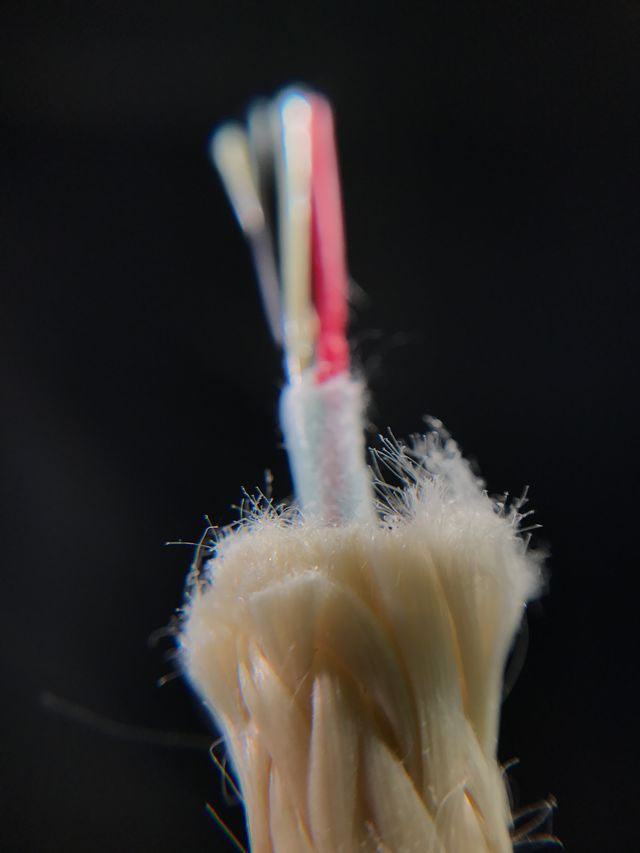
The cable may include optical fibers for data communication, electrical conductors for power or signal transmission, strength members for tensile support, and a buoyant protective jacket. The exact configuration can be customized depending on the application, required fiber count, conductor size, connector type, and deployment environment.