LINDEN-SPE-7110-13 Hybrid (-054) Buoyant Hybrid Cable
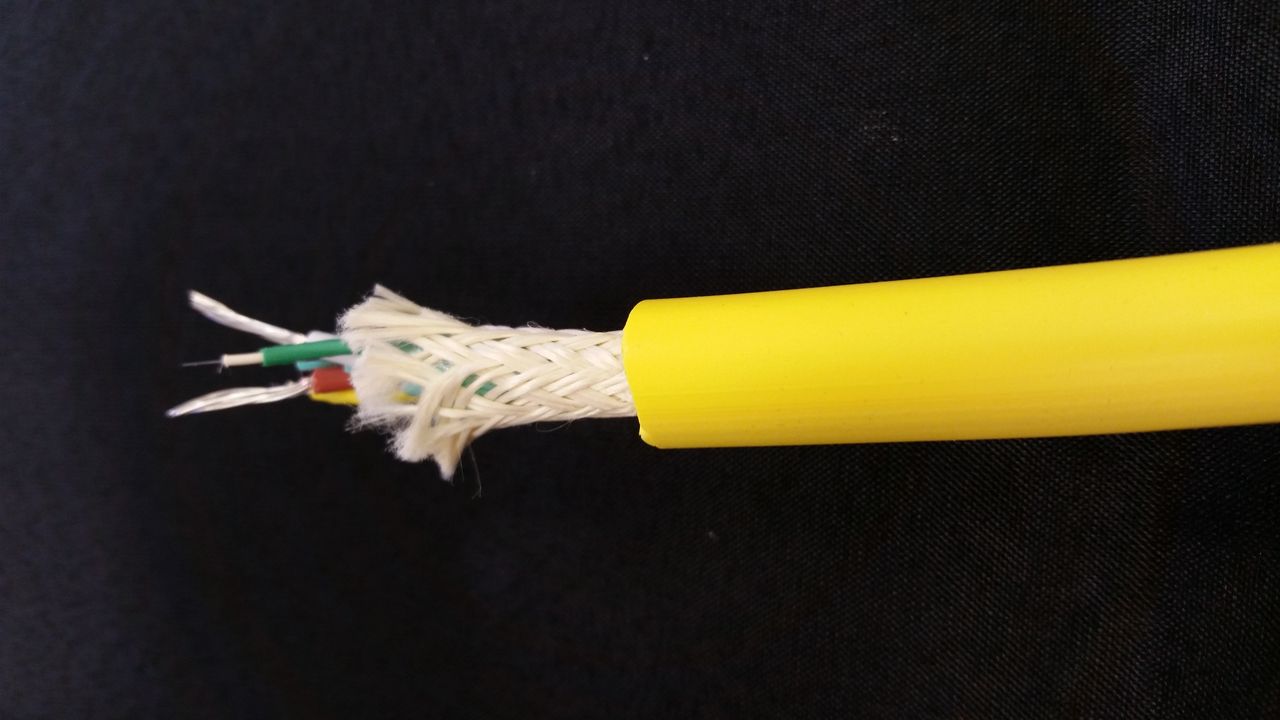
LINDEN-SPE-7110-13 Hybrid (-054) Buoyant Hybrid Cable is a specialized marine cable combining single-mode optical fiber and electrical conductors in a buoyant, mechanically robust design. It is intended for ROV, underwater instrumentation, marine communications, oceanographic, and subsea applications requiring reliable power and high-speed data transmission through a single cable.
Description
The LINDEN-SPE-7110 is a hybrid fiber-optic/electrical cable from Linden Photonics, intended for applications where optical communication and electrical connectivity are required in a single cable. Linden’s published hybrid-cable catalog identifies the configuration as 1 × single-mode (SM) optical fiber + 3 × #16 AWG conductors, with approximately 13 mm outside diameter and 450 lb ultimate tensile strength (UTS).
The “-054” buoyant configuration is associated with buoyant hybrid-cable variants intended for marine and underwater deployment. The buoyant construction is intended to help control the cable’s position in the water, reduce effective submerged cable weight, and reduce drag or seabed contact in appropriate applications. Linden’s current product pages describe the SPE-7110 family as configurable for specialist marine/subsea requirements.
Key Product Features
- Hybrid fiber/electrical construction — combines optical fiber and copper conductors in one cable.
- Single-mode optical fiber — suitable for high-bandwidth optical communications and long-distance data transmission.
- 3 × #16 AWG electrical conductors — provides electrical power, control, or instrumentation connectivity depending on system design.
- Approx. 13 mm cable diameter — compact relative to the functions integrated into the cable.
- Approx. 450 lb UTS — published mechanical tensile-strength figure for the LINDEN-SPE-7110 configuration.
- Buoyant construction — designed for controlled flotation/underwater positioning in applicable configurations.
- Marine/subsea suitability — appropriate for specialized underwater and offshore systems.
- Combined power and data capability — allows optical data and electrical functions to be carried through one tether.
- Reduced cable-management complexity — eliminates the need for separate optical and electrical cable runs in many system designs.
- Suitable for dynamic deployment — hybrid buoyant cables can be used where cable movement, handling, deployment and retrieval are important considerations.
- Customizable construction — Linden indicates that hybrid cables can be engineered around application-specific optical, electrical, mechanical, buoyancy and termination requirements.
Technical Specification
| Parameter | Typical / Published Specification |
|---|---|
| Manufacturer | Linden Photonics |
| Specification | LINDEN-SPE-7110 |
| Product description | Hybrid buoyant fiber-optic/electrical cable |
| Optical fiber | 1 × Single-Mode (SM) |
| Electrical conductors | 3 × #16 AWG |
| Nominal OD | 13 mm |
| Ultimate tensile strength | 450 lb |
| Configuration | Hybrid / buoyant (-054) |
| Primary transmission | Optical data + electrical power/control |
| Environment | Marine, subsea, underwater/offshore applications |
| Construction | Lightweight hybrid cable architecture |
| Customization | Available depending on application requirements |
The 13 mm OD, 1 × SM fiber, 3 × #16 conductor and 450 lb UTS figures are directly supported by Linden’s published hybrid-cable catalog.
Typical Applications
- ROV and underwater robotic systems
- Subsea instrumentation
- Oceanographic research equipment
- Underwater sensor systems
- Marine monitoring systems
- Underwater camera and video systems
- Offshore inspection equipment
- Towed marine instrumentation
- Subsea communications
- Defence and naval systems
- Marine survey equipment
- Remotely operated inspection platforms
- Scientific underwater deployments
- Systems requiring controlled buoyancy and combined optical/electrical connectivity
Main Advantages
1. Multifunctional connectivity: One cable can provide optical communication together with electrical power or control.
2. Buoyancy management: The buoyant configuration can reduce cable loading, seabed contact and interference with moving underwater equipment where positive/controlled buoyancy is required.
3. High-speed communications: Single-mode fiber provides a high-capacity communications path and is inherently resistant to electromagnetic interference.
4. Compact system design: Integrating fiber and copper reduces the number of separate cables that need to be deployed and managed.
5. Marine-oriented construction: The SPE-7110 family is intended for demanding marine/subsea applications and can be configured for specific environmental and mechanical requirements.