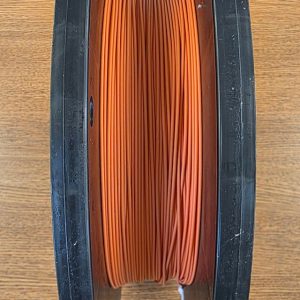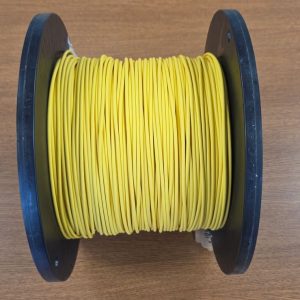
LINDEN-SPE-7110-3 Hybrid (-054) Buoyant Hybrid Cable
Description
The LINDEN-SPE-7110-3 Hybrid (-054) Buoyant Hybrid Cable is a specialised, high-performance cable engineered for demanding marine, subsea, offshore, and underwater applications where dependable power and signal transmission must be combined with controlled buoyancy.
Designed for applications in which conventional cables may create excessive weight or drag in the water, this buoyant hybrid cable combines multiple functional elements within a single robust cable construction. The hybrid configuration can support the transmission of electrical power, data, control signals, or other application-specific services, helping reduce the need for multiple separate cable runs.
Engineered for Buoyant Marine Applications
The LINDEN-SPE-7110-3 is designed with buoyancy characteristics that help minimise the effective weight of the cable when deployed in water. This makes it particularly suitable for systems involving moving underwater equipment, remotely operated platforms, marine instrumentation, subsea sensors, and other equipment where cable weight can affect handling or operational performance.
Its buoyant construction can help improve cable positioning within the water column while reducing downward loading on connected equipment. Depending on the deployment configuration, this may also contribute to improved manoeuvrability and reduced mechanical strain on connectors and termination points.
Hybrid Cable Construction
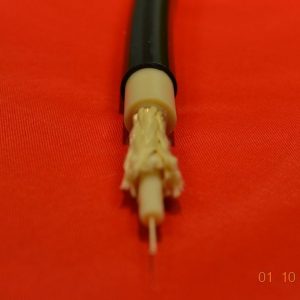
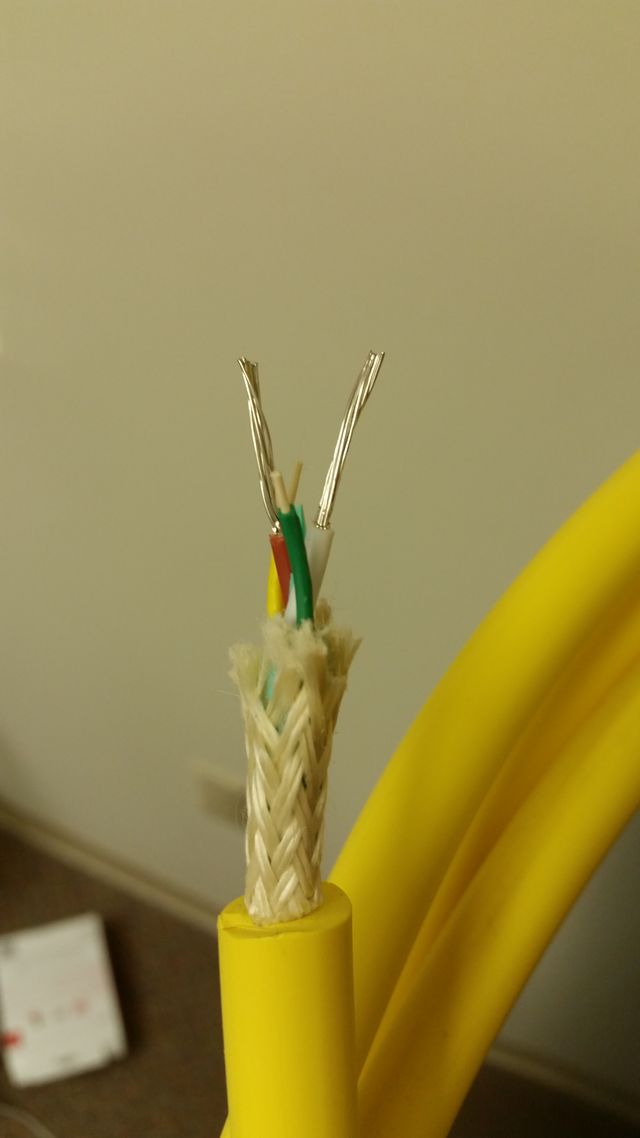
A key advantage of the LINDEN-SPE-7110-3 Hybrid (-054) design is its ability to integrate different transmission functions into one cable assembly. Rather than deploying independent cables for power, communications, and control, a hybrid cable can consolidate the required elements into a single streamlined solution.
This approach can provide several practical benefits, including:
- Reduced overall cable management requirements
- Fewer individual cable runs
- Simplified deployment and recovery
- Improved system integration
- Reduced drag compared with multiple separate cables
- More efficient use of space within marine and subsea systems
The precise internal configuration should be selected according to the electrical, communication, mechanical, and environmental requirements of the intended application.
Designed for Challenging Environments
Marine and underwater cables are routinely exposed to challenging operating conditions, including continuous flexing, water exposure, abrasion, pressure, tensile forces, and repeated deployment cycles. The LINDEN-SPE-7110-3 is intended for applications where a durable and dependable cable construction is essential.
Its specialised design provides protection for the internal cable components while supporting reliable operation in demanding environments. Careful consideration of materials and overall construction helps the cable withstand the mechanical stresses associated with underwater and marine use.
Flexible and Practical
Flexibility is an important consideration for cables connected to mobile or deployable underwater equipment. A cable that is excessively rigid can restrict movement, increase mechanical loading, and make deployment more difficult.
The LINDEN-SPE-7110-3 Hybrid (-054) Buoyant Hybrid Cable is designed to provide a practical balance between mechanical protection and flexibility. This makes it suitable for dynamic applications where the cable may be repeatedly moved, reeled, deployed, or recovered.
Typical Applications
The cable can be considered for a wide range of specialised applications, including:
- Remotely operated underwater vehicles
- Autonomous underwater systems
- Marine robotics
- Underwater cameras and imaging equipment
- Oceanographic instrumentation
- Subsea monitoring systems
- Environmental monitoring equipment
- Offshore inspection systems
- Marine research equipment
- Underwater sensor platforms
- Towed or deployed instrumentation
- Specialised defence and maritime systems
Key Benefits
Buoyant construction: Helps reduce the effective submerged weight of the cable and can support improved cable management in underwater operations.
Hybrid functionality: Allows different power, signal, data, or control elements to be incorporated within a single cable construction.
Reduced system complexity: Consolidating multiple functions into one cable can simplify installation and minimise the number of individual cable connections.
Marine-focused design: Developed for demanding applications where water exposure, movement, and mechanical stresses must be carefully managed.
Flexible configuration: The cable design can support specialised system requirements depending on the intended operating environment and equipment.
Improved deployment characteristics: Buoyancy can help reduce cable sag and mechanical loading while supporting equipment manoeuvrability.