
Fiber Optic Cable: Types, Uses, Benefits & How to Choose the Right Cable
Fiber optic cable powers modern communication across telecom networks, broadband infrastructure, industrial systems, defense platforms, marine environments, ROV operations, and custom engineered applications. Choosing the right cable is not just about speed. It is about transmission distance, durability, environmental protection, mechanical performance, and application-specific design. This page explains what fiber optic cable is, how it works, the main cable types available, where it is used, and how to choose the right solution for your project.
High Speed
Supports fast data transmission with strong signal integrity for modern communication systems.
Long Distance
Ideal for installations where performance over distance matters more than traditional copper options.
Low Interference
Fiber optic cable is valued for its resistance to electromagnetic interference in sensitive environments.
Custom Solutions
Engineered cable designs can be adapted for marine, defense, industrial, tethered, and hybrid applications.
For applications that require more than a standard cable, Linden Photonics also designs custom fiber optic cable solutions for marine, defense, industrial, medical, and harsh-environment systems.
What Is Fiber Optic Cable?
Fiber optic cable is a cable assembly that transmits information as pulses of light through very thin strands of glass or plastic fiber. Because light can carry large amounts of data quickly and efficiently, fiber optic cable has become essential for modern communication systems where speed, bandwidth, low signal loss, and reliability are important.
Unlike traditional copper cabling, fiber optic cable can deliver strong performance over longer distances while remaining lighter in many applications and less affected by electromagnetic interference. That is why it is widely used in broadband infrastructure, telecom systems, data networks, industrial environments, defense, marine systems, and specialized custom applications.
At Linden Photonics, fiber optic cable goes far beyond generic network wiring. The company supports advanced cable design and manufacturing across LPI Cables, custom tethering systems, underwater cable, hybrid designs, defense-related applications, and other high-performance engineered solutions.
Why This Matters
Many buyers search for “fiber optic cable” expecting a simple answer, but the real decision depends on much more than the fiber itself.
- How far does the signal need to travel?
- Will the cable be used indoors, outdoors, subsea, or in a harsh industrial setting?
- Does it need armor, crush protection, or a hybrid build?
- Is standard commercial cable enough, or is a custom design required?
The right answer depends on the application, not just the keyword.
How Does Fiber Optic Cable Work?
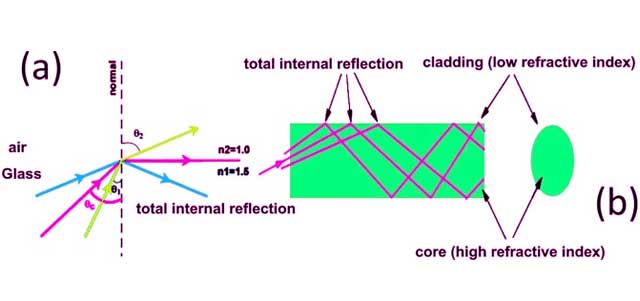
A fiber optic cable carries data using light rather than electricity. At the center of the cable is the core, which carries the light signal. Around the core is cladding, which helps keep the light contained through internal reflection so it can travel along the fiber efficiently. Protective coatings, strength members, and outer jacket materials are then added to help the cable survive handling, installation, and environmental exposure.
In simple terms, a signal is converted into light, sent through the fiber, and received at the other end where it is translated back into usable information. The quality of performance depends on much more than the glass alone. Bend radius, mechanical stress, environmental conditions, cable construction, and protection level all affect how well a fiber optic cable performs in real-world conditions.
If your application involves marine, subsea, or underwater environments, you can also explore Linden’s underwater cable guide and visit the marine / subsea section for more specialized solutions.
Main Types of Fiber Optic Cable
There are several ways to classify fiber optic cable. Some distinctions are based on signal type, while others are based on environment, protection level, or application design. Understanding these differences helps buyers match the right cable to the real demands of the job.
Single-Mode Fiber Optic Cable
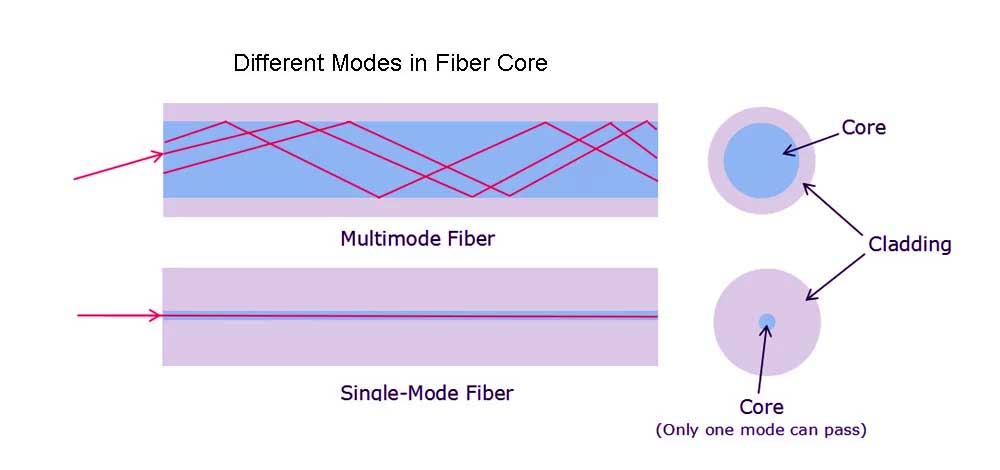
Single-mode fiber optic cable is designed for long-distance, high-performance communication. It carries light in a single transmission path, reducing dispersion and supporting stronger signal performance over greater distances. This makes it a common choice for telecom, long-haul communication, defense systems, high-performance infrastructure, and other applications where long-distance reliability is important.
To learn more about this cable type, visit our page on single-mode fiber optic and types.
Multimode Fiber Optic Cable
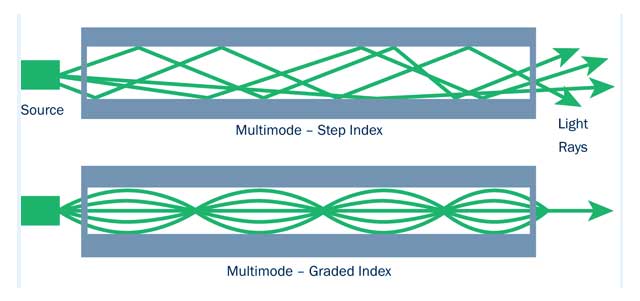
Multimode fiber optic cable is often used in shorter-distance environments such as buildings, campuses, equipment rooms, and certain data communication systems. It can provide strong bandwidth performance over shorter runs and is commonly selected when installation distances are not as extreme as long-haul telecom or field infrastructure projects.
To compare both options in more detail, read our guide on singlemode vs multimode fiber optics.
Armored Fiber Optic Cable
Armored fiber optic cable includes added protection for environments where abrasion, crushing, rodent exposure, or physical impact is a concern. In outdoor installations, industrial sites, or harsh operating conditions, extra mechanical protection can make a significant difference in long-term cable performance and reliability.
For a more detailed look at this type of cable, read our guide on armored fiber optic cable.
Hybrid Fiber Optic Cable
Hybrid fiber optic cable combines optical fibers with other components such as power conductors or specialized elements in a single cable structure. This is especially valuable for tethered systems, robotics, ROVs, mobile platforms, and custom applications where multiple functions need to run through one compact assembly.
Application-Specific and Custom Fiber Optic Cable
Many advanced projects do not fit neatly into standard catalog categories. They may require specific buoyancy, flexibility, crush resistance, jacket materials, diameter targets, tensile strength, or specialized environmental resistance. In these cases, custom cable design can be far more important than simply choosing between single-mode and multimode.
| Type of Fiber Optic Cable | Typical Use | Main Strength | When It Makes Sense |
|---|---|---|---|
| Single-Mode | Telecom, long-distance systems, high-performance communication | Lower dispersion over distance | When long-range signal quality is a priority |
| Multimode | Shorter internal network runs, facility communication | Effective for shorter-distance bandwidth needs | When the installation environment is more localized |
| Armored | Outdoor, exposed, industrial, rugged installations | Extra physical protection | When crush, abrasion, or handling stress is likely |
| Hybrid | ROV, robotics, tethered systems, integrated data/power needs | Multi-function cable design | When one cable must do more than one job |
| Custom Engineered | Marine, defense, aerospace, harsh-duty special applications | Optimized around the application | When standard cable is not enough |
Benefits of Fiber Optic Cable
Higher Bandwidth Potential
Fiber optic cable is widely chosen where systems need fast data transfer and strong communication performance.
Long-Distance Communication
For many infrastructure and industrial systems, fiber provides better performance over distance than traditional copper alternatives.
Low Signal Loss
Properly selected fiber optic cable helps maintain signal quality over longer runs and complex installations.
Resistance to EMI
Fiber is attractive in environments where electromagnetic interference can affect conventional cabling.
Lightweight Design Options
In many applications, fiber cable solutions can reduce overall cable weight while maintaining high performance.
Custom Engineering Flexibility
Fiber optic cable can be designed for highly specific environments including underwater, tethered, buoyant, and mission-critical systems.
These benefits become even more important in specialized applications where cable performance affects not only data transmission, but also durability, deployment success, and long-term maintenance requirements.
Common Uses of Fiber Optic Cable
Telecommunications and Broadband Networks
Fiber optic cable is widely used in telecommunications and broadband expansion because it supports high-speed data transmission over long distances. This makes it central to modern communication infrastructure and network upgrades.
Data Centers and Enterprise Networks
Inside data facilities and high-demand network environments, fiber is used to support stable, high-capacity connections between servers, switches, storage, and other critical communication equipment.
Industrial and Harsh Environments
Industrial settings often need more than a basic communication cable. Exposure to movement, vibration, abrasion, bending, moisture, temperature shifts, or other challenging conditions can make engineered cable design essential.
Marine and Subsea Systems
Marine and underwater systems place unique demands on cable assemblies. Buoyancy, pressure, water exposure, flex, and environmental protection all matter. This is where application-driven design becomes especially valuable.
For marine and subsea applications, you can also explore our marine / subsea solutions and learn more in our underwater cable guide.
ROV and Tethered Applications
ROV systems and tethered platforms need cable that is lightweight, strong, reliable, and engineered for data transmission in difficult environments. These applications often benefit from custom or hybrid cable design.
If your project involves remotely operated systems, take a look at our ROV cables for more specialized solutions.
Defense and Aerospace
Defense and aerospace applications often require high-performance cable with strict design considerations, including weight, strength, reliability, environmental resistance, and transmission performance. These needs make specialized engineering especially important.
For mission-critical and specialized military applications, explore our defense solutions.
How to Choose the Right Fiber Optic Cable
Choosing the right fiber optic cable starts with understanding the job the cable needs to do. Search traffic may begin with a broad term like “fiber optic cable,” but the correct selection depends on installation conditions, signal requirements, protection needs, and the operating environment.
1. Define the Distance
Long-distance systems often require different fiber choices from short internal runs or local equipment connections.
2. Understand the Environment
Indoor, outdoor, industrial, marine, subsea, and defense environments place very different demands on cable design.
3. Consider Protection
Armor, jacket materials, crush resistance, flexibility, and abrasion resistance can all be critical to durability.
4. Review System Demands
Bandwidth, signal integrity, integration needs, and installation method all affect the best cable configuration.
5. Decide on Standard vs Custom
Some jobs fit a standard cable. Others need a custom or hybrid solution designed around the real application.
6. Plan for Longevity
The lowest-cost cable is not always the best value if the environment will shorten service life or increase failures.
For a more detailed breakdown of cable selection, see our guide on how to choose the right fiber optic cable for your needs.
Why Linden Photonics?
Many pages on the web explain fiber optic cable at a general level. What makes Linden Photonics stronger is the connection between technical knowledge and real-world applications. This is not just a brand repeating basic definitions. It is a company with relevance across fiber optic cable products, LPI cable solutions, ROV tethering, underwater cable, marine systems, and application-driven design for difficult environments.
That gives this page a chance to do more than define the keyword. It can help visitors move from general understanding to the right product path. Someone reading this page may be looking for standard products, comparing cable types, or trying to understand what kind of solution is needed for a specialized application.
- Need a broader overview? Link to Products.
- Need cable manufacturing context? Link to LPI Cables.
- Need application-specific guidance? Link to marine, ROV, defense, or underwater pages.
- Ready to discuss a project? Link to Contact Us.
Frequently Asked Questions About Fiber Optic Cable
What is fiber optic cable used for?
Fiber optic cable is used for high-speed data transmission in telecom networks, broadband systems, data environments, industrial communication, marine systems, defense applications, and many custom engineered projects.
What is the difference between single-mode and multimode fiber optic cable?
Single-mode is generally chosen for longer-distance, high-performance transmission, while multimode is commonly used for shorter-distance communication within more localized systems.
When should I choose armored fiber optic cable?
Armored fiber optic cable is useful when the installation environment includes higher physical risk, such as abrasion, crush exposure, rodent issues, or harsh external handling conditions.
Can fiber optic cable be custom designed?
Yes. Many specialized projects require cable that is engineered for specific environments, protection levels, flex requirements, buoyancy targets, or integrated functions.
Is fiber optic cable better than copper?
That depends on the application, but fiber is often preferred where higher bandwidth, longer distance, lower signal loss, and resistance to electromagnetic interference are important.
How do I know which fiber optic cable I need?
Start by looking at distance, environment, protection needs, installation method, and whether the project requires a standard solution or a custom engineered cable.
Need Help Choosing the Right Fiber Optic Cable?
Whether you need a standard product, a rugged armored option, a marine or underwater solution, an ROV tether, or a custom engineered cable design, Linden Photonics can help match the cable to the demands of the application.